Lavoro e Vita personale attraverso allenamenti intervallati
5 agosto 2015 § Lascia un commento

In una conferenza presso un’Istituto poche settimane fa, è nata una grande discussione intorno al fatto che i carichi di lavoro tendono a flusso e reflusso, ed è importante sapere come alternare tra periodi di sforzo e di recupero.
In poco tempo, qualcuno ha notato l’analogia con lo sport e i suoi alti livello di prestazione richiesti; da qui è nata una frase che ha suscitato la mia curiosità: Atleta Aziendale.
Prendendo spunto da Loehr e Schwartz,ho buttato giù un breve articolo, in modo da condividerlo con voi, (l’argomento è già stato trattato da tanti grandi ma vorrei dire la mia) i quali hanno osservato come i vincitori del mondo dello sport si preparano alle gare e in che modo applicano i concetti di gestione Aziendale/Manageriale.
Gli stessi atleti invitano i dirigenti/Manager/responsabili “ad allenarsi allo stesso; in modo sistematico multilivello come gli atleti di livello mondiale fanno”.
Questo non significa costringere i dirigenti/Manager/responsabili a eseguire sprint alla velocità del vento (anche se alcuni lo fanno). Piuttosto, essi sono allenati in un programma olistico progettato per aiutarli a raggiungere e sostenere le massime prestazioni nel loro mestiere.
Ciò che mi colpisce di più nella scrittura Loehr e Schwartz è il loro uso frequente della parola “equilibrio”. In particolare, vedono i grandi atleti e gli “atleti aziendali” che ottengono il giusto equilibrio attraverso tre dimensioni critiche:
1. Mente e Corpo
2. Prestazioni e Sviluppo
3. Sforzo e ripristino
Naturalmente, persone che cercano di avere successo sia al lavoro che a casa stanno costantemente pensando in termini di equilibrio. Ma forse Loehr e Schwartz ci hanno dato un modo più delicato di pensare ciò che deve essere equilibrato.
Utilizzando le loro dimensioni potremmo diventare eccellenti nel bilanciamento? vediamo come..
In primo luogo, pensiamo all’equilibrio mente-corpo. Per gli atleti, il classico errore da evitare è concentrarsi solo sulla preparazione del proprio corpo per la competizione. I Grandi allenatori cercano di guidare e sostenere i loro atleti per vincere la competizione sia a livello mentale che fisico.
Le persone nell’azienda, al contrario, sono troppo propensi a sviluppare compiti intellettuali e spesso(molto spesso) dimenticano che i loro corpi devono essere in buona salute se si vuole avere l’energia per svolgere bene il proprio lavoro.
Un approccio di successo per sostenere nel tempo elevate prestazioni è “di raccogliere (molti) elementi e considerare la persona nella sua interezza”;
“Si devono affrontare il corpo, le emozioni, la mente e lo spirito”
Per gli atleti ma anche per noi, le parole “lavoro e vita”, “equilibrio mente-corpo” suggeriscono che dovremmo dormire a sufficienza, mangiare abbastanza bene, impegnarsi in qualche esercizio – e fare spazio nella nostra vita per l’interazione sociale; Altri cercano questo “equilibrio” attraverso la riflessione e la meditazione o la preghiera. Non c’è bisogno di essere in perfetta forma per essere bravo nel tuo lavoro o efficace come genitore. Ma se trascuriamo il nostro corpo, o lo spirito, potremmo non avere abbastanza energia per essere efficaci sia nel lavoro che in famiglia.
L’equilibrio prestazioni-sviluppo hanno una particolare importanza per il regno tra lavoro e vita. Gli atleti sanno che la stragrande maggioranza del loro sforzo è speso per lo sviluppo, e per la preparazione in vista dell’esecuzione che dovranno mettere in atto durante la competizione vera e propria.
Nel lavoro, si sente come le proporzioni sono invertite: ogni giorno i responsabili devono svolgere i loro compiti al massimo, e solo una piccola parte del loro tempo è riservato a se stessi e al proprio sviluppo professionale.
Gli Atleti, nel loro percorso di sviluppo individuale, si concentrano su singoli elementi della loro competizione e costruiscono le loro capacità nei fondamentali; a seguire nei giorni di gara,raccolgono tutti i pezzi insieme e spingono le prestazioni al massimo.
Allo stesso modo nel mondo del lavoro, ci sono opportunità in cui i manager possono tirare fuori solo quello che stanno cercando di realizzare attingendo a tutte le loro competenze; ma tra i “punti fondamentali”, emerge la capacità di concentrarsi sull’affinare gli elementi necessari per raggiungere l’obiettivo.
Chiunque voglia sostenere un vantaggio di prestazioni ha bisogno di capire come continuare a sviluppare nuove capacità, e non solo continuare attingendo a quelli esistenti. Se tutto ciò non può essere realizzato attraverso attività quotidiane, si richiede del tempo regolarmente programmato, si richiede difermare dei momenti per se stessi; Che si tratti di bloccare 30 minuti ogni giorno a leggere riguardo gli sviluppi del settore, l’ascolto di un corso di lingua, delle news durante il tragitto della mattina, o provare una nuova ricetta ogni settimana; spegnere la pressione da prestazioni crea una maggiore apertura a nuovi approcci e aumenta le prestazioni nel lungo periodo.
Questo ci porta, infine a comprendere come gli atleti riescano a gestire ottimamente sforzo-equilibrio- recupero.
“Nel laboratorio vivente dello sport, si apprende che il vero nemico non è lo stress, per quanto paradossale possa sembrare, è in realtà lo stimolo per la crescita, derivante dall’assenza di disciplina”. Per esempio, nel sollevamento peso, uno spinge i muscoli fino al punto in cui le fibre letteralmente iniziano a rompersi. Tuttavia, dopo un adeguato periodo di recupero, il muscolo non solo guarisce, ma cresce più forte, senza riposo, si finisce con un danno acuto e cronico.
Nel lavoro, i progetti con scadenze ravvicinate e gli obiettivi sfidanti, possono risultare fondamentali – ma il ritmo non può essere incessante. Il superlavoro occasionale può essere una necessità, come situazioni particolarmente impegnative nella vita personale, ma il superlavoro cronico ci priva della nostra resistenza. Questo riduce le nostre prestazioni nel tempo, e provoca danni nel nostro lavoro e nella vita personale. Allo stesso modo,molti genitori che lavorano vanno a tutta velocità, non-stop per affrontare tutto quello che devono fare a senza tenere conte del tempo per recuperare, rischiando di perdere efficacia.
Il recupero, non significa saltare da una attività all’altra ma piuttosto prendere delle pause.
Dal punto di vista della gestione, abbiamo bisogno di ripensare l’idea che il tempo non utilizzato è tempo sprecato. Invece, abbiamo bisogno di vedere che il recupero è un componente chiave di un sistema ad alte prestazioni che si deve sostenere nel tempo.
Questo significa che dobbiamo resistere al continuare a chiedere maggiore disponibilità di tempo al nostro team, oppure di interpellarli dopo l’orario di lavoro tenendoli sempre in una situazione di tensione.
Dobbiamo incoraggiare il nostro Team a fermarsi e ragionare, rilassarsi durante il fine settimana, fare in modo che ci siano momenti di stacco; questo significa contribuire a sostenere i giusti equilibri, costruendo nelle persone la giusta resistenza nel tempo nell’affrontare percorsi complessi rappresentati dal mercato in cui operiamo.
Organizzare il proprio tempo è il primo passo per organizzare la propria vita e il proprio lavoro.
Ridurre lo stress, iniziate a respirare
21 luglio 2015 § Lascia un commento
Buongiorno a tutti
Respirare è una cosa naturale che tutti facciamo, ma avete mai notato che quando siete in stress oppure avete paura il respiro di blocca??
Di seguito un Video tratto da HBR che vi darà una piccola indicazione per aiutarvi ad iniziare meglio la giornata;
per iniziare, mettete un piccolo post-it con scritto “ricordati di respirare” sotto il vs video e vedrete che vi aiuterà (ringrazio una cara amica per il suggerimento datomi qualche anno fa)
5 segni per capire che è ora di cambiare lavoro
16 luglio 2015 § Lascia un commento
HBR è sempre una fonte inesauribile di argomenti interessanti;

Regardless of your age, background, or accomplishments, you have probably fantasized about the possibility of a new career at some point in your life – those who haven’t are the exception.
LinkedIn reports that of its 313 million members, 25% are active job seekers, while 60% can be considered passive job seekers – people who are not proactively searching for a new job, but seriously willing to consider opportunities. In addition, there has been a steady increase of self-employed and temporary workers over the past two decades. This is true even in rich economies with low unemployment rates, like the U.S. and the U.K., partly because of the glamorization of entrepreneurship, the rise of the sharing economy, and the ubiquity of incompetent management, which makes the prospect of not having a boss rather alluring.
Yet at the same time, humans are naturally prewired to fear and avoid change, even when we are decidedly unhappy with our current situation. Indeed, meta-analyses show that people often stay on the job despite having negative job attitudes, low engagement, and failing to identify with the organization’s culture. And, since career changes are often driven by emotional rather than rational factors, they often end up disappointing. So at the end of the day, there is something comforting about the predictability of life: it makes us feel safe. As the Danish philosopher Søren Kierkegaard observed: “Anxiety is the dizziness of freedom.”
You and Your Team
-
When you’re feeling stuck.
The inability to make a decision is in itself anxiety-provoking, because it increases uncertainty about the future. In addition, most people, even millennials, value long-term job stability, not just in themselves but also inothers. Unsurprisingly, the OECD sees job security as a key component of quality of life, while academic studies report that job insecurity is a major cause of psychological stress.
All this explains why it is so hard to leave a job, no matter how uninspiring or monotonous it may be. In order to help you decide whether it may be time for a career change, here are five critical signs, based on psychological research, that you would probably benefit from a career switch:
- You are not learning. Studies have shown that the happiest progression to late adulthood and old age involves work that stimulates the mind into continuous learning. This is particularly important if you are high onOpenness to Experience/Inquisitiveness, a personality trait associated with curiosity, creativity, love of learning, and having a hungry mind.
- You are underperforming. If you are stagnated, cruising in autopilot, and could do your job while asleep, then you’re almost certainly underperforming. Sooner or later, this will harm your resume and employability. If you want to be happy and engaged at work you are better off finding a job that entices you to perform at your highest level.
- You feel undervalued.Even when employees are happy with their pay and promotion prospects, they will not enjoy their work unless they feel appreciated, especially by their managers. Furthermore, people who feel undervalued at work are more likely to burnout and engage in counterproductive work behaviors, such as absenteeism, theft, and sabotage. And when the employee in question is a leader, the stakes are much higher for everyone else because of their propensity to behave in ways that coulddestroy the organization.
- You are just doing it for the money. Although people tend to put up with unrewarding jobs mostly for financial reasons, staying on a job just for the money is unrewarding at best, and demotivating at worst. As I pointed out in a previous post, employee engagement is three times more dependent on intrinsic than extrinsic rewards, and financial rewards extinguish intrinsic goals (e.g., enjoyment, sheer curiosity, learning or personal challenge).
- You hate your boss. As the saying goes, people join companies but they quit their bosses. This implies that there is a great deal of overlap between employees who dislike their jobs, and those who dislike their bosses. In ourresearch, we find that 75% of working adults find that the most stressful part of their job is their immediate supervisor or direct line manager. Until organizations do a better job at selecting and developing leaders, employees will have to lower their expectations about management or keep searching for exceptional bosses.
Of course, these are not the only signs that you should pay attention to. There are many other valid reasons for considering a job switch, such as work-life balance conflicts, economic pressures, firm downsizing, and geographical relocation. But these reasons are more contextual than psychological, and somewhat less voluntary. They are therefore less likely to lead to decision uncertainty than the five reasons I listed.
At the end of the day, real-world problems tend to lack a clear-cut solution. Instead, the correct answer depends on its consequences and how pleased we are with the outcome, and both are hard to predict. As Abraham Lincoln said, “the best way to predict the future is to create it,” so the only way to know whether a career move is actually right for you is to make it.
Tre elementi di successo per implementare la collaborazione
10 Maggio 2015 § Lascia un commento
Often, when you get to the point that people agree to move forward with the collaboration, everyone thinks, “Whew! We are done.”
You’re not done—not even close. Now it is time to deliver.
A lack of focus on the discipline of implementation is the main reason companies fall short on their promises. That’s because implementation is more than a tactic; it is a discipline and a system that has to be embraced by leadership and ingrained into the threads of a company’s strategy, goals, and culture.
Three Keys to Successful Implementation:
1. Focus on the Goal
Successful implementation comes through focus. Individually, team members have to know what to do; they have to want to do it; they have to know how to do it; and they have to be disciplined in sustaining the course to get it done. As a team, they have to work well together by relying on one another, overcoming barriers, demonstrating trust and transparency, and holding each other accountable. An increased level of trust among participants will heighten confidence in one another’s intentions and actions, infusing commitment toward the common goal. When they have commitment, they are even willing to override personal self-interest in the interests of the collaborative.
Focus is required to prevent the ever pervasive scope creep that regularly slides into business projects. This can be costly and demotivating. Therefore, set hard deadlines and stick to them. Do not let inertia set in “to let others catch up.” When deadlines are not adhered to, the initial building phase can go on for years, even indefinitely. That’s why it is important to set goals, which can be easily viewed as a project with a specific beginning and end. This is much easier to get your arms around for planning, budgeting, and measuring return on collaboration.
2. Celebrate Success
Referring back to the race car analogy used earlier in this chapter, you have to keep the team motivated throughout the race. That checkered flag may be a long way off in the distance. That’s why it is important to celebrate the small successes along the way. Break down large projects into small steps to demonstrate “wins” in shorter time frames. Showing progress keeps everyone energized toward achieving the goal.
Keep the flame of purpose lit (the internal PR plan) so people don’t forget why they need to collaborate. It is important to align resources, recognition, and incentives to reinforce commitment.
3. Track, Measure, Adjust
Collaborators tend to have an entrepreneurial spirit—always looking forward, moving on to the next venture. This is an advantage and disadvantage. While being forward-thinking is a required characteristic for successful leaders, it often makes us forget the all important step of evaluating our efforts to ensure we are achieving return on collaboration (ROC).
Several factors can change over time that can cause collaboratives to veer off track. Market shifts, economic swings, competitive landscape, and consumer demands are continuously changing the business environment. Any collaborative strategy has to be adapted in response to these environmental changes.
Other changes may be going on within the collaborative that also need to be monitored. Are the goals and objectives of the collaborative’s members being achieved? How have expectations or opinions toward the collaborative changed? Have new players or leadership been introduced? Have new risks emerged that need to be addressed?
To ensure the collaborative stays on the right path, develop tracking systems and measures for both the planning and execution phases. Regularly assess your systems and measures. Does the tracking system get to the heart of the problem you’re trying to solve? Do your measures really tell you whether you’ve accomplished the objective? The right measures help make expectations clear. Get the team involved by pushing metrics/scorecards down to the team, where the data is being collected and used. A good scorecard has long-term outcomes and leading indicators (short-term drivers).
Don’t let the data get in the way of discussing why things aren’t working. It is up to the leader to see that meaningful conversations take place after all the numbers are reported. Therefore, set up formal reviews. Successful execution of plans means continual reviews. Meetings should track objectives and variances with a critical eye toward corrective action. Don’t allow rationalizations and excuses to obscure reality. People and resources should be a top priority at review sessions. The right people need to be in the right roles. This means continual evaluation.
10 errori nella gestione del tempo
8 Maggio 2015 § Lascia un commento
Avoiding Common Pitfalls
Learn how to overcome several common
time management mistakes.
How well do you manage your time? If you’re like many people, your answer may not be completely positive! Perhaps you feel overloaded, and you often have to work late to hit your deadlines. Or maybe your days seem to go from one crisis to another, and this is stressful and demoralizing.
Many of us know that we could be managing our time more effectively; but it can be difficult to identify the mistakes that we’re making, and to know how we could improve. When we do manage our time well, however, we’re exceptionally productive at work, and our stress levels drop. We can devote time to the interesting, high-reward projects that can make a real difference to a career. In short, we’re happier!
In this article, we’re looking at ten of the most common time management mistakes, as well as identifying strategies and tips that you can use to overcome them. These ten mistakes are:
Mistake #1. Failing to Keep a To-Do List
Do you ever have that nagging feeling that you’ve forgotten to do an important piece of work? If so, you probably don’t use a To-Do List to keep on top of things. (Or, if you do, you might not be using it effectively!)
The trick with using To-Do Lists effectively lies in prioritizing the tasks on your list. Many people use an A – F coding system (A for high priority items, F for very low priorities). Alternatively, you can simplify this by using A through D, or by using numbers.
If you have large projects on your list, then, unless you’re careful, the entries for these can be vague and ineffective. For instance, you may have written down “Start on budget proposal.” But what does this entail? The lack of specifics here might cause you to procrastinate, or miss key steps. So make sure that you break large tasks or projects down into specific, actionable steps – then you won’t overlook something important.
You can also use Action Programs to manage your work when you have many large projects happening at once. (Action Programs are “industrial strength” versions of To-Do Lists.)
Mistake #2. Not Setting Personal Goals
Do you know where you’d like to be in six months? What about this time next year, or even 10 years from now? If not, it’s time to set some personal goals!
Personal goal setting is essential to managing your time well, because goals give you a destination and vision to work toward. When you know where you want to go, you can manage your priorities, time, and resources to get there. Goals also help you decide what’s worth spending your time on, and what’s just a distraction.
To learn how to set SMART, effective goals, read up on Locke’s Goal Setting Theory . Here, you’ll learn how to set clearly defined goals that will keep you motivated.
You might also enjoy our Book Insight into Long Fuse, Big Bang by Eric Haseltine. This book teaches you how to focus on your long-term goals without overlooking your short term priorities.
Mistake #3. Not Prioritizing
Your assistant has just walked in with a crisis that she needs you to deal with right now, but you’re in the middle of brainstorming ideas for a new client. You’re sure that you’ve almost come up with a brilliant idea for their marketing campaign, but now you risk losing the thread of your thinking because of this “emergency.”
Sometimes, it’s hard to know how to prioritize , especially when you’re facing a flood of seemingly-urgent tasks. However, it’s essential to learn how to prioritize tasks effectively if you want to manage your time better.
One tool that will help you prioritize effectively is the Action Priority Matrix , which will help you determine if a task is high-yield and high-priority, or low-value, “fill in” work. You’ll manage your time much better during the day if you know the difference.
You might also want to go through our Bite-Sized Training session How to Prioritize , to further enhance your skills.
Mistake #4. Failing to Manage Distractions
Do you know that some of us can lose as much as two hours a day to distractions? Think how much you could get done if you had that time back!
Whether they come from emails, IM chats, colleagues in a crisis, or phone calls from clients, distractions prevent us from achieving flow , which is the satisfying and seemingly effortless work that we do when we’re 100 percent engaged in a task.
If you want to gain control of your day and do your best work, it’s vital to know how to minimize distractions and manage interruptions
effectively. For instance, turn off your IM chat when you need to focus, and let people know if they’re distracting you too often. You should also learn how to improve your concentration
, even when you’re faced with distractions.
Additionally, our article on managing email effectively teaches you how to gain control of your email, so that it doesn’t eat up your entire day.
Mistake #5. Procrastination
Procrastination occurs when you put off tasks that you should be focusing on right now. When you procrastinate, you feel guilty that you haven’t started; you come to dread doing the task; and, eventually, everything catches up with you when you fail to complete the work on time.
Start by taking our procrastination quiz to find out if procrastination is a problem in your life. If it is, then learn the strategies you need to beat procrastination
.
For instance, one useful strategy is to tell yourself that you’re only going to start on a project for ten minutes. Often, procrastinators feel that they have to complete a task from start to finish, and this high expectation makes them feel overwhelmed and anxious. Instead, focus on devoting a small amount of time to starting. That’s all!
You might also find it helpful to use Action Plans . These help you break large projects down into manageable steps, so that it’s easy to see everything that you need to get done, and so that you can complete small chunks at a time. Doing this can stop you from feeling overwhelmed at the start of a new project.
Our Bite-Sized Training session, Overcoming Procrastination , gives you more in-depth strategies and tips for dealing with procrastination.
Mistake #6. Taking on too Much
Are you a person who has a hard time saying “no” to people? If so, you probably have far too many projects and commitments on your plate. This can lead to poor performance, stress, and low morale.
Or, you might be a micromanager : someone who insists on controlling or doing all of the work themselves, because they can’t trust anyone else to do it correctly. (This can be a problem for everyone – not just managers!)
Either way, taking on too much is a poor use of your time, and it can get you a reputation for producing rushed, sloppy work.
To stop this, learn the subtle art of saying “yes” to the person, but “no” to the task . This skill helps you assert yourself, while still maintaining good feelings within the group. If the other person starts leaning on you to say “yes” to their request, learn how to think on your feet
, and stay cool under pressure.
Mistake #7. Thriving on “Busy”
Some people get a rush from being busy. The narrowly-met deadlines, the endless emails, the piles of files needing attention on the desk, the frantic race to the meeting… What an adrenaline buzz!
The problem is that an “addiction to busyness” rarely means that you’re effective, and it can lead to stress.
Instead, try to slow down, and learn to manage your time better.
“Do More Great Work”, by Michael Bungay Stanier, is full of ideas and tips to reduce the “busywork” that you’re doing, so that you’re more excited and engaged in the work that matters. Click here for our Book Insight on it.
Mistake #8. Multitasking
To get on top of her workload, Linda regularly writes emails while she chats on the phone to her clients. However, while Linda thinks that this is a good use of her time, the truth is that it can take 20-40 percent more time to finish a list of jobs when you multitask, compared with completing the same list of tasks in sequence. The result is also that she does both tasks poorly – her emails are full of errors, and her clients are frustrated by her lack of concentration.
So, the best thing is to forget about multitasking , and, instead, focus on one task at a time. That way, you’ll produce higher quality work.
Our Expert Interview with Dave Crenshaw, looking at The Myth of Multitasking , will give you an enlightening look at multitasking, and will help you explore how you can manage simultaneous projects more effectively.
Mistake #9. Not Taking Breaks
It’s nice to think that you can work for 8-10 hours straight, especially when you’re working to a deadline. But it’s impossible for anyone to focus and produce really high-quality work without giving their brains some time to rest and recharge.
So, don’t dismiss breaks as “wasting time.” They provide valuable down-time, which will enable you to think creatively and work effectively.
If it’s hard for you to stop working, then schedule breaks for yourself, or set an alarm as a reminder. Go for a quick walk, grab a cup of coffee, or just sit and meditate at your desk. Try to take a five minute break every hour or two. And make sure that you give yourself ample time for lunch – you won’t produce top quality work if you’re hungry!
Mistake #10. Ineffectively Scheduling Tasks
Are you a morning person? Or do you find your energy picking up once the sun begins to set in the evening? All of us have different rhythms, that is, different times of day when we feel most productive and energetic.
You can make best use of your time by scheduling high-value work during your peak time, and low-energy work (like returning phone calls and checking email), during your “down” time. Our article, Is This a Morning Task? will teach you how to do this.
Key Points
One of the most effective ways of improving your productivity is to recognize and rectify time management mistakes.
When you take the time to overcome these mistakes, it will make a huge difference in your productivity – and you’ll also be happier, and experience less stress!
Lamentarsi troppo inibisce i neuroni di chi ci sta accanto – ESSERE POSITIVI
3 Maggio 2015 § Lascia un commento
Lamentarsi troppo inibisce i neuroni di chi ci sta accanto
Stare troppo tempo vicini a persone che si lamentano facilmente rischia di renderci più stupidi, perché sembra che inibirebbe la nostra capacità cerebrale di risolvere problemi.

Secondo alcuni neuroscienziati, restare a lungo esposti alle lamentele di parenti, amici e colleghi di lavoro rischia di renderci più stupidi.

A scriverlo nel suo libro “Tre semplici passi: una mappa per il successo nel lavoro e nella vita” è l’imprenditore Trevor Blake, in cui viene spiegato che stare ad ascoltare i problemi (spesso piccoli e ininfluenti) di persone a noi vicine, in ambito affettivo o nell’ambiente di lavoro, influisce negativamente sull’ippocampo, una zona cerebrale responsabile anche nella risoluzione dei problemi, e sui neuroni.
Bastono solo 30 minuti di piagnistei quotidiani per impegnare tale parte del cervello distogliendola da altri compiti più importanti e limitando, nel tempo, la nostra capacità di pensiero.
Il problema non deriva solamente da chi ci circonda, da coloro che vedono tutto negativo, da chi è convinto che il mondo (o un’entità eterea) ce l’abbia con lui. Sono anche le lamentele televisive, quelle dei talk-show o i dati negativi sviscerati al telegiornale, per intenderci, ad avere effetti di disturbo sulle nostre capacità cognitive. D’altronde, che i problemi ci creassero molta ansia e difficoltà di concentrazione è cosa che già ciascuno di noi ha sperimentato personalmente, senza bisogno di studi scientifici. Ma qui, però, si parla delle lamentele altrui.
Cosa fare? Sembra brutto a dirsi, ma bisogna essere una volta tanto egoisti. Dobbiamo allontanarci quanto prima possibile da chi incomincia il solito, inutile, irrisolvibile piagnisteo. Qualcuno suggerisce di comportarsi alla Homer Simpson, che a volte isola il cervello quando la moglie si arrabbia, oppure si tura le orecchie e inizia a cantare ad alta voce “LA-LA-LA-LA-LA-LA-LA-LA-LA”!

Altri suggeriscono di portarsi delle comode cuffiette stereo con musica rilassante negli ambienti di lavoro. O, peggio, ricorrere a tappi per l’orecchio. Tutte misure non sempre applicabili quando si lavora: se il gran capo ci chiama o ci telefona e noi non rispondiamo in tempo, rischiamo di sorbirci anche le sue, di lamentele! Si potrebbe dire in modo energico alla persona lamentosa di darci un taglio ma potremmo peggiorare la situazione.
Più utile è cercare di rassicurare chi si lamenta di continuo tramite dei gesti o delle parole che possono trasmettere positività. E se anche questo non dovesse funzionare, potete passare al contrattacco e iniziare a lamentarvi anche voi con la persona pessimista, costringendola ad ascoltare i vostri problemi.
Magari, oltre a distogliere la sua attenzione dalle cose negative, la farete riflettere sul fatto che, in fondo, ognuno ha i propri guai!
Un modo migliore di accogliere nuovi membri del team
13 aprile 2015 § Lascia un commento
Quando si porta su nuovi membri del team, è importante attentamente e deliberatamente integrarli nel gruppo. In caso contrario, i nuovi arrivati possono sentirsi isolati o diventare emarginati. Fai sentire tutti più confortevole:
Preparazione del gruppo per i nuovi arrivati. Discutere in anticipo perché è prezioso per comprendere le persone con diverse prospettive e competenze. Assicurarsi che i ruoli dei nuovi membri sono chiari a tutti.
Corrispondenza nuovi arrivati con mentori esperti. Quando i nuovi assunti hanno una persona con esperienza a rivolgersi a li aiuta acclimatarsi alla squadra più rapidamente e meglio comprendere il flusso di lavoro.
Fare introduzioni significativi. I membri del team esistenti possono già conoscere gli uni degli altri competenze, interessi e stili, ma facendo introduzioni propositivo e favorire la condivisione di informazioni con i nuovi membri possono aiutare legame tutti.
Giuseppe
I 7 consigli da seguire per costruire un team EFFICACE!
25 marzo 2015 § Lascia un commento
Il modo migliore per ottenere dei risultati dall’attività che si sta seguendo è, senza dubbbio, creare un ambiente di lavoro armonico e sereno in cui il flusso di idee circola senza ostacoli.
In questa presentazione scopriamo quali sono i consigli per costruire un team efficace!
I 7 consigli per costruire un team efficace
Keep going!
é importante sbagliare…
23 dicembre 2014 § Lascia un commento
Tutti puntano alla perfezione, a fare tutto giusto al primo tentativo..solo coloro che imparando dai loro errori non mollano potranno avere successo.
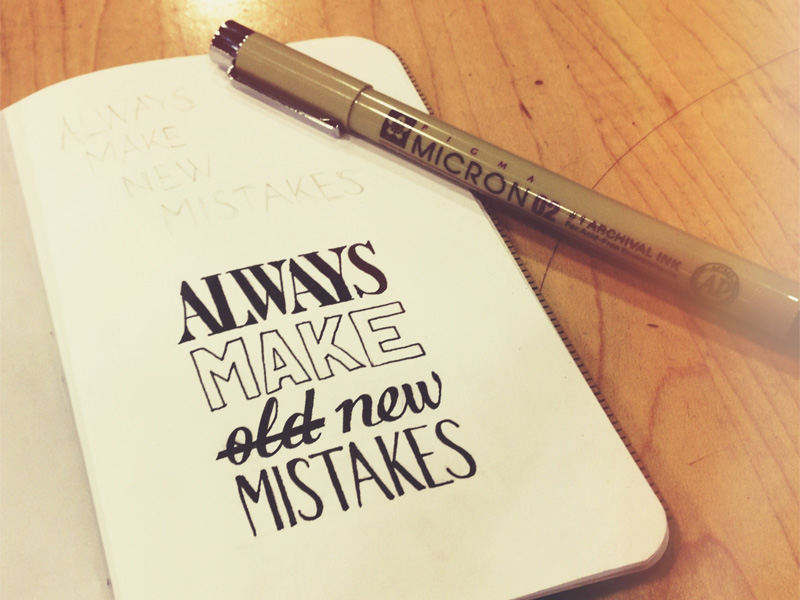
Questo articolo vi aiuta a capire come comportarsi
Buona lettura
Most of us would accept that failure is just an inevitable part of success. For instance, when you learn how to ski, you have to fall a number of times before you’re able to make it down the mountain skillfully. There are times, however, when failure is not a good thing, such as when you need to meet a customer deadline or achieve a competitive level of quality. Unfortunately, many managers don’t distinguish between when failure can be a valuable catalyst for learning and when it can be truly harmful, leaving employees unsure about when to take risks and experiment, and when to play it safe. For managers and employees, the key to getting this right is understanding whether the organization is in execution mode or innovation mode.
I was reminded of this difference while teaching in Silicon Valley last year. As everyone knows, the area between San Francisco and San Jose has thousands of start-up companies, as well as dozens of innovation “outposts” set up by established companies from around the world. In talking with the people who are involved with these innovation efforts, the striking thing is not their descriptions of success, but of the failures that helped them along the way. In Silicon Valley (and other hotbeds of innovation), failure is badge of honor and a pre-requisite for success—not something to be ashamed of. For these innovators, a successful company, and a successful career, requires a continuing series of rapid experiments, tests, hypotheses, and pivots—which means that nobody gets it right the first time (or the second or third). As a result, failure is highly valued.
In contrast, the established companies that I’ve spent most of my career working with are focused on executing what they already know how to do instead of innovating something new. And when failure occurs in the context of execution, it can harm results or reputation or create undue risk. So even when execution-focused executives say that it’s all right to fail, they usually don’t really mean it. As someone at the Federal Reserve (the quintessential execution organization) once told me, “Around here we want to make sure our people don’t make the same mistake once.”
The real challenge for leaders is not to either accept or reject failure, but rather to differentiate between whether they are in execution or innovation mode. Being in execution mode means that standard operating practices have been developed and need to be implemented with as little deviation as possible. Sure there can be improvements made, but these have to be done carefully and explicitly, under controlled conditions, so that the basic operations are not disrupted. As such, failure needs to be minimized or eliminated.
Innovation mode, on the other hand, is when standards still don’t exist and best practices are still being discovered and tested. In this kind of situation, it’s important to try out new ideas, formats, and processes – and allow room for plenty of failure – in order to learn what works and what does not. Once the focus becomes clear, managers can more easily communicate what the appropriate attitude toward failure should be.
The reason why many established firms struggle with innovation is that they bring the execution mentality with them, and then don’t encourage the failure necessary to develop new products, services, or processes. In a large financial services firm, for example, senior executives talked constantly about innovation but quashed proposals and projects that didn’t meet the margin thresholds of their established products within two months. By setting the financial bar so high, they ended up discouraging teams from doing prototypes and pilots because in reality nobody was allowed to really fail.
On the other hand, the reason why many start-ups hit a wall when they try to scale up is that they don’t know how to shift into execution mode where failure should be much less tolerated. For example, a small solar energy start up that that I worked with in the Bay area, after much trial and error, had produced a viable product and was starting to generate revenue. But instead of creating a disciplined process for sales and marketing, they allowed the manager (an early employee) to continually miss targets and encourage her sales people to “experiment” with different kinds of pitches and price points. By supporting this pattern of failure at an inappropriate time in the company’s evolution, the firm ended up with a major cash problem that prevented it from capitalizing on its product achievements.
So yes, failure is a key to learning, growing and figuring out what works. But before you either celebrate or punish failure, make sure you know what you are trying to achieve by doing so.
Smettete di credere di essere perfetti
22 dicembre 2014 § Lascia un commento
Cari Lettori
di seguito un articolo, presa HBR, che rispecchia molto il mio modo di vivere e si pensare (al contrario);
spesso non si accettano gli errori, sopratutto quando si parla di noi stessi, ma si deve mettere in conto che può accadere, e che dagli stessi si può imparare molto
Buona lettura
The value of failure has become a mantra in Silicon Valley, with the rise of events likeFailCon, a conference “for startup founders to study their own and others’ failures and prepare for success.” Failure, the thinking goes, is an intense form of hands-on education that — when done right — enables you to learn quickly and grow.
Despite the startup world’s enthusiasm, however, there’s often a lingering stigma: it’s less that you’ve tried and failed, and more that you are “a failure.” On a recent book tour supporting the French translation of my book, I met dozens of professionals who bemoaned what they viewed as their country’s particularly acute “one strike and you’re out” attitude toward failure. Of course, it’s not just in Europe; failure is still generally taboo almost everywhere in the world.
But the truth is that failure isn’t a rarity experienced by the unlucky few; if we’re honest, it’s a constant — albeit rarely lethal — state of affairs. In fact, it’s likely that you’ve already failed, or will soon (perhaps you launched a product that didn’t sell, were passed over for a promotion, flubbed a presentation, or any of a million other varieties). Here’s how to leverage that setback into even greater success.
Recognize that innovation requires failure. In a world where competitive advantage is increasingly short-lived, as Columbia Business School professor Rita Gunther McGrath has described, successful companies have to bake innovation into their standard processes. But innovation of any sort entails risk and trying new things — and that mandates failure. A 100% success rate implies you’re not doing anything new at all. The goal, says Eric Ries ofThe Lean Startup fame, is to create a minimum viable product that you’ll fully expect to iterate over time. In some ways, it’s a reframing: it’s not so much that you’re creating something (such as a product or service) that failed; it’s that you’re steadily improving a series of drafts.
Own your failure narrative. When I wrote an article a while back about someone involved in the U.S. financial markets and mentioned his indictment — and subsequent exoneration — during the crisis, I received an angry note from his wife: why did you have to include that? Of course, since he’d written about the experience in his own book (providing the most thoughtful and gripping part of the narrative), it hadn’t occurred to me they’d still be trying to keep it quiet. But habits, including the need to appear perfect, are hard to break.
That’s why talking about failure commands so much attention — it’s still shocking in a world that expects a triumphalist narrative. Blogger James Altucher has built a passionate following by writing in almost gory detail about his failures in business and life, including making millions and then losing it all, twice. In his book, The Education of a Value Investor, money manager Guy Spier tells his story of accepting a job soon out of business school at what turns out to be an ethically-challenged investment bank that soon goes down. Even though he didn’t participate in the malfeasance, he was humiliated by the stain on his resume, and grapples with his own naiveté. People might judge him and Altucher for their mistakes. But because they’re the ones telling the story, we’re able to see the world through their eyes, and grasp the full force of their redemption. (Altucher is now more successful than ever as a writer, and since 1997, Spier has run his own investment fund based on cautious, Warren Buffett-inspired principles.)
Understand that failure is an ongoing process. It’s important to recognize that failure is not a “one and done” phenomenon, where you climb the mountain and stay on top. Rather, it’s an ongoing process. On the same day this spring, I was turned down for two different fellowships I had applied for. That doesn’t mean I’m not successful; by other metrics — writing books, speaking, consulting, and teaching for business schools — I’m doing fine. But stretch goals are just that: things outside your wheelhouse that may work out, or not. The goal, as research shows, should be to make “new and different mistakes.” And if we want to make it safer for others to try, we have to be willing to talk about failure in the present tense — not just something that happened to us once, long ago.
We all love irresistible, come-from-behind success stories about “failed” entrepreneurs likeKevin Systrom, who folded his unsuccessful check-in app Burbn and pivoted it into the billion-dollar Instagram, or Ben Silbermann of Pinterest, which began life as a struggling mobile shopping site called Tote. Failure makes success possible, but not because of the eventual possibility for lucrative exits. Rather, failure opens the dialogue to show that we don’t have to be perfect; in fact, we can’t be. We need to speak honestly and openly — to let ourselves be known, so that failure and mistakes are put in their proper context. We can’t be afraid to acknowledge that, if we’re growing, failure isn’t an anomaly. It happens every day.
 Wtco
Wtco 
Devi effettuare l'accesso per postare un commento.